So steigerst du deine Kraft im Bankdrücken
28. Mai 2026
Wenn dein Bankdrücken seit Monaten stagniert, ist die Lösung wahrscheinlich keine neue Brustübung. Meistens sind es bessere Technik, mehr spezifische Praxis und ein sinnvollerer Umgang mit schweren Gewichten.
Bankdrücken ist eine Fähigkeit. Stärkere Brustmuskeln helfen, aber wie du die Hantel drückst, ist enorm wichtig.

Die einfache Antwort
Um deine Kraft im Bankdrücken zu steigern, konzentriere dich auf vier Dinge:
- Korrigiere deine Hantelbahn.
- Nutze eine Griffbreite, mit der du effizient drücken kannst.
- Drücke häufiger Bank.
- Baue kontrollierte schwere Top-Sets ein.
Nichts davon ist Magie. Aber es kann schnell einen Unterschied machen, weil du dadurch die Kraft, die du bereits hast, besser ausdrücken kannst.
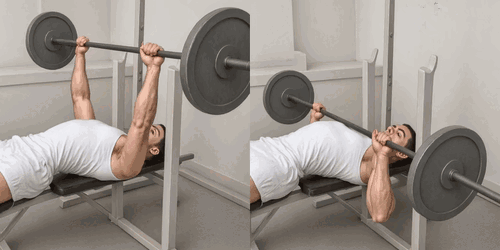
1. Korrigiere deine Hantelbahn
Ein häufiger Fehler ist der Versuch, die Hantel in einer perfekt vertikalen Linie zu drücken.
Als allgemeine Idee funktioniert das bei Kniebeugen und Kreuzheben gut. Beim Bankdrücken ist es meistens nicht die stärkste Bahn.
Wenn du die Hantel absenkst, bewegt sie sich normalerweise leicht nach vorne in Richtung untere Brust oder Brustbein. Das bringt die Hantel in eine gute Position am tiefsten Punkt, erzeugt aber auch eine Herausforderung: Die Hantel befindet sich jetzt vor dem Schultergelenk.
Wenn du von dort gerade nach oben drückst, müssen deine vorderen Schultern mehr arbeiten als nötig. Die Hantel bleibt zu lange zu weit vorne.
Ein stärkerer Press bewegt sich meistens nach hinten und oben.
Das bedeutet:
- senke die Hantel kontrolliert ab
- berühre etwa den Bereich der unteren Brust oder des Brustbeins
- drücke die Hantel leicht zurück in Richtung Schultern
- beende dann den Press bis zum Lockout
Das heißt nicht, die Hantel nach hinten zu werfen. Es heißt, sie in eine stärkere Linie zu führen.
Ein hilfreicher Cue ist:
Drücke die Hantel beim Pressen zurück in Richtung Rack.
Ein anderer Cue:
Drücke deinen Körper von der Hantel weg.
Beides kann dir helfen, nicht gerade von der Brust nach oben zu drücken.
So überprüfst du deine Hantelbahn
Filme dein Bankdrücken von der Seite.
Filme nicht von vorne. Von der Seite kannst du tatsächlich sehen, ob sich die Hantel gerade nach oben bewegt oder einer leichten Bahn nach hinten und oben folgt.
Achte darauf:
| Phase | Besseres Muster |
|---|---|
| Absenken | Leicht nach unten und vorne |
| Tiefpunkt | Hantel etwa auf unterer Brust/Brustbein |
| Press | Nach hinten und oben |
| Lockout | Hantel über dem Schultergelenk |
Wenn die Hantel direkt von deiner Brust senkrecht nach oben schießt und erst später nach hinten wandert, machst du den schwersten Teil des Lifts wahrscheinlich schwerer als nötig.
2. Probiere einen etwas breiteren Griff
Die Griffbreite verändert das Bankdrücken stark.
Ein sehr enger Griff erhöht den Bewegungsumfang und verlagert mehr Arbeit auf den Trizeps. Das kann für Trizepstraining sinnvoll sein, ist aber für ein maximales Bankdrücken meistens nicht die stärkste Position.
Ein breiterer Griff kann helfen, weil er:
- den Bewegungsumfang verkürzt
- die Brustmuskeln stärker einbindet
- es leichter machen kann, den oberen Rücken fest zu halten
- oft die Stabilität auf der Bank verbessert
Das heißt nicht, dass jeder sofort so breit wie möglich greifen sollte.
Wenn sich deine Schultern schlecht anfühlen oder du am tiefsten Punkt die Kontrolle verlierst, ist dein Griff aktuell zu breit für dich.
Ein praktischer Ansatz:
- beginne mit deinem aktuellen Griff
- bewege jede Hand etwa um eine Fingerbreite nach außen
- teste das über ein paar Einheiten
- behalte es nur bei, wenn Kraft, Kontrolle und Schulterkomfort besser werden
Ändere deinen Griff nicht drastisch in einem einzigen Training. Kleine Änderungen lassen sich leichter beurteilen und leichter anpassen.
Schnelle Griffregel
Am tiefsten Punkt des Bankdrückens sollten deine Unterarme von vorne betrachtet annähernd vertikal sein.
Wenn deine Handgelenke deutlich innerhalb deiner Ellenbogen sind, ist dein Griff möglicherweise zu eng.
Wenn deine Handgelenke deutlich außerhalb deiner Ellenbogen sind und sich deine Schultern instabil anfühlen, ist dein Griff möglicherweise zu breit.
3. Drücke häufiger Bank
Wenn du besser im Bankdrücken werden willst, musst du Bankdrücken trainieren.
Für viele Lifter ist Bankdrücken einmal pro Woche nicht genug Praxis, um schnell besser zu werden. Zweimal pro Woche ist besser. Dreimal pro Woche ist für Kraft oft der Sweet Spot.
Der Schlüssel ist, dass nicht jeder Bankdrück-Tag gleich sein sollte.
Du musst nicht dreimal pro Woche Maximalversuche machen. Das ist meistens ein schneller Weg, Schultern, Ellenbogen und Regeneration zu belasten.
Ein besseres Setup ist, über die Woche verschiedene Ziele zu nutzen.
Beispiel:
| Tag | Fokus | Beispiel |
|---|---|---|
| Tag 1 | Muskelaufbau und Volumen | 3–4 Sätze à 8 |
| Tag 2 | Geschwindigkeit und Technik | 6–8 leichtere Sätze à 3 |
| Tag 3 | Kraft | 3–5 Sätze à 5 |
So bekommst du mehr Praxis, ohne jede Einheit in einen Maximaltest zu verwandeln.
Warum Frequenz funktioniert
Bankdrücken ist nicht nur Brustkraft.
Es hängt auch ab von:
- konstanter Setup-Routine
- fester Position des oberen Rückens
- Timing des Leg Drives
- Hantelbahn
- Handgelenk- und Ellenbogenposition
- Selbstvertrauen unter Last
Häufigere Praxis verbessert diese Details schneller.
Aber nur, wenn du sauber trainierst.
Wenn du dreimal pro Woche mit schlampigen Wiederholungen Bank drückst, wirst du nur besser in schlechter Technik.
4. Baue ein schweres Top-Set pro Woche ein
Ein schweres Top-Set ist ein schwererer Satz, den du vor deinen Hauptarbeitssätzen machst.
Es ist kein Maximalversuch.
Das Ziel ist, oft genug mit schwerem Gewicht umzugehen, damit es sich nicht mehr einschüchternd anfühlt, ohne deine Regeneration zu zerstören.
Ein guter Startpunkt:
- einmal pro Woche
- 1 Top-Set
- 2–3 Wiederholungen
- etwa 85–90 % deines geschätzten 1RM
- kein Grinden
- danach das Gewicht für deine normale Arbeit reduzieren
Beispiel:
Top-Set:
1 × 2–3 Wiederholungen schwer, sauber, kontrolliert

Back-off-Arbeit:
3–4 × 6–8 Wiederholungen mit leichterem Gewicht
Das Top-Set bringt dir bei, unter schwereren Lasten fest zu bleiben. Danach geben dir die Back-off-Sätze das Volumen, das du brauchst, um Kraft und Muskulatur aufzubauen.
Verwandle Top-Sets nicht in Ego-Lifting
Ein Top-Set sollte Technik und Selbstvertrauen aufbauen.
Es sollte kein wöchentlicher Maximaltest werden.
Vermeide diese Fehler:
- Wiederholungen nicht schaffen
- hässliche Grind-Reps
- die Hantel abfedern lassen
- dein Setup verlieren
- die Technik ändern, nur um den Lift zu schaffen
Wenn dein Top-Set komplett anders aussieht als dein normales Bankdrücken, ist es zu schwer.
Häufige Fehler beim Bankdrücken
Gerade nach oben drücken
Das ist eines der größten Techniklecks.
Wenn die Hantel von der Brust weg zu weit vorne bleibt, wird der Lift schwerer als nötig. Filme von der Seite und korrigiere die Bahn.
Zu viele Dinge auf einmal ändern
Ändere nicht Griff, Brücke, Fußposition, Tempo und Programm in derselben Woche.
Ändere eine Sache. Tracke das Ergebnis.
Hart, aber nicht oft genug Bank drücken
Ein brutaler Brusttag pro Woche ist nicht dasselbe wie Bankdrück-Praxis.
Wenn Kraft das Ziel ist, brauchst du häufigere Exposition.
Zu oft schwer trainieren
Schwere Arbeit hilft, aber ständiges Maximieren ist kein Programm.
Die meisten deiner Wiederholungen sollten sauber, wiederholbar und kontrolliert sein.
Das Setup ignorieren
Dein Setup ist Teil des Lifts.
Prüfe vor jedem Satz:
- Füße fest am Boden
- oberer Rücken fest
- Schulterblätter nach hinten und unten gezogen
- Brust hoch
- Handgelenke gestapelt
- Hantel vor dem Absenken kontrolliert
Ein nachlässiges Setup führt meistens zu einem schwächeren Press.
Eine einfache 3-Tage-Struktur fürs Bankdrücken
Hier ist ein praktisches wöchentliches Setup für die meisten fortgeschrittenen Lifter.
Tag 1: Volumen
Bankdrücken
3–4 Sätze × 8 Wiederholungen
Moderate Last
1–3 Wiederholungen im Tank
Nutze diesen Tag, um Muskulatur aufzubauen und konstante Wiederholungen zu üben.
Tag 2: Geschwindigkeit und Technik
Bankdrücken
6–8 Sätze × 3 Wiederholungen
Leichtere Last
Schnell, aber kontrolliert
Perfektes Setup in jedem Satz
Das sollte sich nicht wie ein Maximalversuch anfühlen. Das Ziel ist saubere Technik.
Tag 3: Kraft
Bankdrücken
1 Top-Set × 2–3 Wiederholungen
Danach 3–5 Sätze × 5 Wiederholungen
Nutze diesen Tag, um mit schwererem Gewicht umzugehen und Selbstvertrauen aufzubauen.
So setzt du das in deinem Training um
Starte einfach.
Für die nächsten vier Wochen:
- Filme dein Bankdrücken einmal pro Woche von der Seite.
- Prüfe, ob sich die Hantel nach hinten und oben bewegt.
- Teste einen etwas breiteren Griff, wenn sich dein aktueller Griff eng anfühlt.
- Drücke zwei- bis dreimal pro Woche Bank.
- Baue nur dann ein schweres Top-Set ein, wenn deine Technik stabil ist.
Jage nicht jede Woche einem neuen 1RM hinterher.
Tracke stattdessen deine Arbeitssätze. Wenn deine 5er-Sätze, 8er-Sätze und Top-Sets besser werden, steigt dein Maximum wahrscheinlich ebenfalls.
Wie Gymfile hilft
Fortschritt im Bankdrücken ist leichter, wenn du tatsächlich sehen kannst, was passiert.
Gymfile hilft dir, deine Sätze, Wiederholungen, Gewichte, Pausenzeiten, Routinen und deinen Fortschritt über die Zeit zu tracken. Das ist wichtig, weil Kraft im Bankdrücken empfindlich auf kleine Änderungen reagiert.
Eine Steigerung um 2,5 kg ist Fortschritt. Eine sauberere Wiederholung mit demselben Gewicht ist Fortschritt. Bessere Kontrolle mit derselben Last ist Fortschritt.
Du kannst Gymfile auch nutzen, um deine Bankdrück-Frequenz organisiert zu halten, Leistungen über Einheiten hinweg zu vergleichen und zu vermeiden, dass du deine Routine jede Woche zufällig änderst.
Willst du es einfacher machen? Mehr erfährst du auf gymfile.de oder lade die iOS-App im App Store herunter.
Zusammenfassung
Wenn du deine Kraft im Bankdrücken steigern willst, denke nicht nur an Brustübungen.
Konzentriere dich auf den Lift selbst.
Die wichtigsten Regeln:
- drücke die Hantel nach hinten und oben, nicht gerade nach oben
- nutze eine Griffbreite, die Kraft und Kontrolle verbessert
- drücke mehr als einmal pro Woche Bank
- nutze ein schweres Top-Set pro Woche, keine ständigen Maximalversuche
- tracke deine Leistung über die Zeit
Bankdrücken belohnt Konstanz. Kleine Technikverbesserungen, oft wiederholt, können zu einem deutlich stärkeren Lift werden.