How to Build 3D Delts: Shoulder Training Rules That Actually Matter
May 27, 2026
If you want shoulders that look wider, rounder, and more complete, random lateral raises are not enough.
You need enough weekly volume, smart exercise selection, progressive overload, and a better way to train all parts of the delts — not just the obvious front, side, and rear raise pattern.
The simple answer
To build 3D delts, focus on these seven rules:
- Keep your traps from taking over.
- Train shoulders more often.
- Get strong on a vertical shoulder press.
- Get lean enough for your shoulders to show.
- Train the delts through different muscle lengths.
- Use the right progression method for each exercise.
- Train more shoulder angles, not just front/side/rear.
None of this replaces hard training and consistency. But if your shoulders are lagging, these details can make your shoulder work much more productive.

Why it matters
Shoulders change how your whole physique looks.
Well-developed delts make your upper body look wider. Rear delts make your back look thicker from the side and behind. Side delts create the “capped” shoulder look. A smaller waist makes all of that stand out more.
But shoulder training is easy to mess up.
Many lifters do a few lazy lateral raises after chest day, press with inconsistent form, and never track whether their shoulder exercises are actually progressing. That can maintain your delts, but it probably will not maximize them.
1. Stop letting your traps steal the movement
On lateral raises, the goal is not just to move the weight up.
The goal is to load the side delts.
If you shrug the weight up, your traps take over. Some trap involvement is normal, especially near the top of the movement, but if you initiate every rep by shrugging, your side delts lose tension.
Use this cue:
Keep your shoulders down and sweep the weight out to the side, like you are scooping sand away from your body.
That cue usually works better than just thinking “raise the dumbbells.”
Good options:
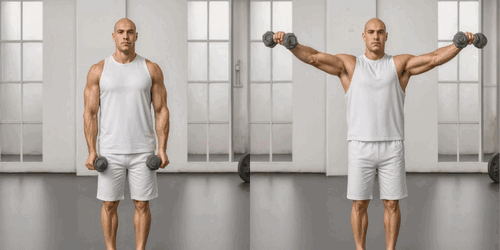

Practical rules:
- Start the rep by moving the arms, not by shrugging.
- Keep the neck relaxed.
- Think “wide,” not “up.”
- Use a weight you can control.
- If you feel it mostly in your traps, lower the weight.
2. Train shoulders more often
Most lifters do not need one huge shoulder day.
They need more frequent shoulder work.
For hypertrophy, the useful amount of hard work per muscle in one session probably starts to lose efficiency after roughly 6–8 hard sets. You can do more, but the return often drops. Instead of cramming 15 shoulder sets into one day, spread them across the week.
For delts, this works especially well because isolation shoulder work usually recovers quickly.
A better setup:
| Frequency | Best for |
|---|---|
| 1x/week | Maintenance or low priority |
| 2x/week | Basic progress |
| 3x/week | Good target for most lifters |
| 4x/week | Useful for delt specialization |
Example weekly setup:
| Day | Shoulder work |
|---|---|
| Push day | Shoulder press + lateral raise |
| Pull day | Rear delt fly |
| Leg day | Cable lateral raise |
| Upper day | Machine press + rear delt work |
You do not need to destroy your shoulders every session. Three to six hard sets can be enough if you repeat that consistently.
3. Get strong on a shoulder press
Isolation work matters, but do not ignore heavy vertical pressing.
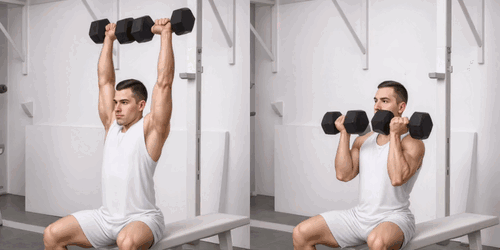
A good shoulder press gives you a stable way to overload the delts with heavier loads over time. It also trains more than just the front delts. The side delts contribute meaningfully during vertical pressing, especially when the movement is controlled and loaded hard.
Good choices:



Pick one press you can progress safely.
Then keep it in your plan long enough to matter.
A useful approach:
- 3–4 sets
- 5–8 reps
- 1–3 reps in reserve most weeks
- Add small amounts of weight when performance is solid
- Keep the same exercise for several months
Do not change your main shoulder press every two weeks. If you keep changing the test, you cannot clearly see progress.
4. Bring your waist down if you want delts to look more 3D
This is not a shoulder exercise, but it matters a lot.
Shoulders look wider when the waist is smaller. They also look more separated when body fat is low enough to show the shape of the deltoid.
You can build bigger delts while gaining weight. But if your goal is the visual “3D delt” look, leanness matters.
Simple rule:
- Build the muscle with progressive training.
- Reveal the shape with a controlled fat-loss phase when needed.
Do not confuse the two.
A bigger shoulder muscle under a high amount of body fat will not look as sharp as a slightly smaller shoulder on a leaner frame.
5. Train the delts at different muscle lengths
Most shoulder training overloads the delts in a shortened or mid-range position.
That is not wrong. But if all your delt work looks the same, you may be missing useful tension in stretched positions.
For presses, use a full comfortable range of motion. Do not stop too high just because it lets you lift more weight. Lower the handles or dumbbells as far as your shoulders tolerate with control.
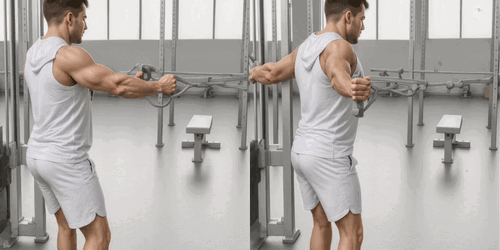
For lateral raises, cables are useful because they keep tension when the arm is closer to the body or even slightly across the body.
A strong side-delt option:
How to make it better:
- Stand slightly away from the cable.
- Let the working arm start slightly across your body.
- Raise out and slightly up.
- Control the stretch at the bottom.
- Do not bounce.
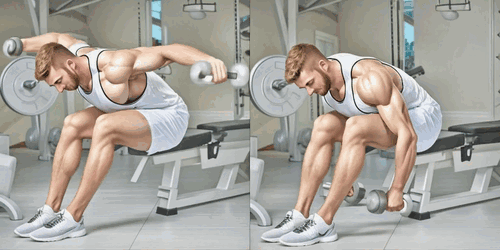
For rear delts, do not cut the range short. Let the arm come across the body, then sweep back with control.
Good options:

6. Use the right progression method
Progressive overload matters, but not every shoulder exercise should progress the same way.
A shoulder press can often use simple linear progression for a while. Add a little weight when you hit your target reps with good form.
Lateral raises and rear delt flyes are different.
You cannot just add weight every week forever. The jumps are too big relative to the exercise. A small increase can turn clean reps into ugly swinging.
Use double progression instead.
Example for lateral raises:
| Week | Weight | Target |
|---|---|---|
| 1 | 10 kg | 10 reps |
| 2 | 10 kg | 11 reps |
| 3 | 10 kg | 12 reps |
| 4 | 12 kg | 10 reps |
You do not need to improve every set every week. Adding one rep to one set is still progress.
For isolation delt work, good rep ranges are usually:
- 10–15 reps
- 12–20 reps
- 15–25 reps for very strict raises
If your form breaks, the progression does not count.
7. Train more than just front, side, and rear
The delts are usually described as three heads: front, side, and rear.
That is useful, but it is simplified. The shoulder has many fibers running at slightly different angles. If you only press, lateral raise, and do one rear delt fly, you may still miss some useful lines of pull.
This does not mean you need 12 shoulder exercises.
It means you should include a few different angles across the week.
Good shoulder angles to cover:
| Area | Example |
|---|---|
| Heavy vertical press | Machine or dumbbell shoulder press |
| Side delt raise | Dumbbell or cable lateral raise |
| Rear delt fly | Cable, dumbbell, or machine reverse fly |
| High scapular plane raise | Y-raise style movement |
| Rear delt row angle | Rear delt row or wide pulling movement |
Useful options:
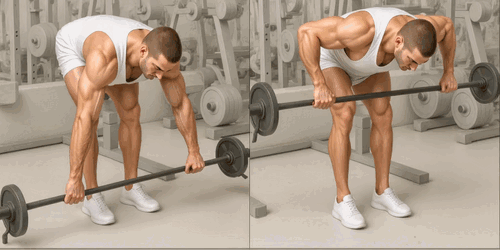
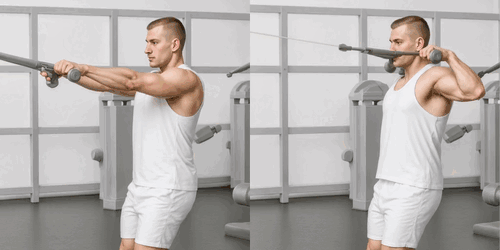
A simple delt-focused shoulder plan could look like this:
| Exercise | Sets | Reps |
|---|---|---|
| Machine Shoulder Press | 3 | 5–8 |
| Cable Lateral Shoulder Raise | 3 | 10–15 |
| Reverse Cable Shoulder Flyes | 3 | 12–20 |
| Face Pulls | 2 | 15–25 |
That is not magic. It is just balanced.
You get heavy loading, side delt work, rear delt work, and a higher-rep shoulder health-friendly movement.
Common mistakes
Going too heavy on raises
If your lateral raise looks like a full-body swing, the weight is too heavy.
Use a load that lets you control the bottom, middle, and top.
Only training shoulders after chest
If shoulders are a priority, do not always train them when you are already tired.
Put shoulder work earlier in the session at least once per week.
Ignoring rear delts
Rear delts make your shoulders look better from the side and back. They also help balance all the pressing most lifters already do.
Do not treat them as optional.
Changing exercises too often
Exercise variety is useful. Randomness is not.
Run an exercise long enough to progress it. Then rotate when progress stalls or the movement stops feeling productive.
Tracking only the big lifts
Small isolation lifts still need tracking.
If you do the same lateral raise weight for the same reps for six months, do not be surprised if your side delts stop changing.
How to apply it in your training
Start with this simple shoulder checklist:
- Train delts 2–4 times per week.
- Keep most shoulder sessions to 3–8 hard sets.
- Use one main vertical press.
- Use at least one side-delt isolation exercise.
- Use at least one rear-delt isolation exercise.
- Include cable or stretched-position work if possible.
- Track reps and weight.
- Progress presses differently from raises.
- Keep form strict enough that the target muscle is actually doing the work.
If shoulders are a weak point, give them priority for 8–12 weeks.
That could mean doing lateral raises before chest work, adding rear delts to pull days, or placing a short shoulder block after leg training.
Small doses work well when repeated often.
How Gymfile helps
Shoulder growth is easier when you stop guessing.
Gymfile helps you track your exercises, sets, reps, weights, rest times, and muscle recovery in one place. That matters because delt training depends on small improvements over time, especially on exercises where progress is easy to miss.
You can build shoulder-focused routines, track different raise variations, monitor your pressing strength, and see whether your weekly shoulder volume is actually consistent.
Want to make this easier? Download Gymfile for iOS and start tracking your shoulder training properly.
Summary
3D delts come from more than just doing lateral raises.
You need enough frequency, good pressing strength, strict side-delt work, rear-delt training, smart progression, and enough leanness for the shape to show.
The main rules are simple:
- Keep your traps out of lateral raises.
- Train shoulders more than once per week.
- Get strong on a vertical press.
- Use cables or longer ranges where useful.
- Progress raises with reps before weight.
- Train multiple shoulder angles.
- Track what you do.
Shoulders usually respond well when you train them often, control the movement, and stop changing the plan every week.